|
|
|
|
| |
|
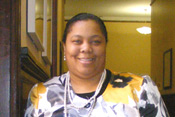
Nicki Newton has been an educator for the past 16 years, working in inner city schools on both the East and West coasts. Having spent several years as a bilingual teacher and staff developer, she has an extensive background in Sheltered Instruction and English Language Learner Strategies. Furthermore, she has worked with Heidi Hayes Jacobs in facilitating both the Curriculum Mapping and the Interdisciplinary Curriculum Institutes at Teachers College, Columbia University. Her work as an adjunct professor at a NY university, teaching elementary curriculum and math methods courses keeps her abreast of the latest educational theories. She has presented at several national and international conferences on education-- including being an invited speaker for the NEA on developing a meaningful, student centered, interdisciplinary social studies curriculum as well as working on a special interdisciplinary social studies curriculum for t the AFT.
Curriculum Mapping 101: Getting Started
In this informative learning workshop, participants will learn the benefits,
opportunities and successes of curriculum mapping. Nicki Newton will share
and discuss with participants how to get started. For this initial
workshop, she will focus on creating quality essential questions, mapping
conceptual ideas and content, determining precision skills, using 21st
assessments and checking for alignment to one another and state or other
standards/benchmarks (Jacobs, 2009). Nicki will walk through the process
from beginning to end, sharing successful strategies and important steps to
creating maps that work. Participants will have the opportunity to see
various maps, ask questions and begin work on their own mapping.
Curriculum Mapping 102: Keeping Up the Momentum
In this informative learning workshop, participants will learn the
strategies and tips on how to keep up the momentum of mapping. Nicki Newton
will focus on the more advanced phases of mapping including, demarcating
differentiation, doing a bi-level language analysis and doing a 21st century
update of activities and assessments. She will also discuss with
participants how to review maps for redundancy, gaps and absences.
Participants will have the opportunity to see various maps, ask questions
and work on their own maps.
|
|
|
 |
|
|
|
|
|
|