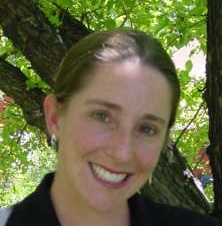
Dr. Tricia Gallagher-Geurtsen received her doctoral degree in Curriculum and Teaching from Columbia University’s Teachers College. Tricia was a bilingual public elementary school teacher and a migrant education teacher in California. Tricia presents and consults with K-12 teachers in workshops and in their classrooms, helping them to integrate research-based, flexible and engaging methods and strategies into their planning and teaching with the goals of:
- raising academic achievement for English Language Learners;
- making instruction more effective through Understanding by Design;
- increasing interest and relevance of social studies education;
- making the classroom more equitable for all learners.
As a teacher educator, Tricia has taught both preservice and inservice teachers methods and theory for teaching social studies, reading, science, integrated curriculum, English as a Second Language, and multicultural curriculum and teaching. She is the recipient of the 2003 American Educational Research Association’s Outstanding Dissertation Award for Curriculum Studies and the 2003-2004 Mortar Board National Senior Honor Society Top Professor Award at Utah State University. Tricia writes and presents nationally about meeting the needs of diverse learners. Selected publications include Teaching English Language Learners: Bilingual Education and English as a Second Language Efforts published by Houghton Mifflin in 2009; Linguistic Privilege: Why educators should be concerned published by Lawrence Erlbaum Associates in 2007; Instructor's Resource Manual to accompany Educational Foundations-- Diverse Perspectives published by Houghton Mifflin in 2009.
99 Strategies for Engaging Your English Learners (K-6 or 7-12)
In this interactive hands-on workshop educators will understand how to make academic content accessible to English Learners. Teachers practice with a variety of flexible sheltering strategies and plan how to incorporate them into their instruction. All of the strategies are research-based and draw upon the SIOP Model (Sheltered Instruction Observation Protocol).